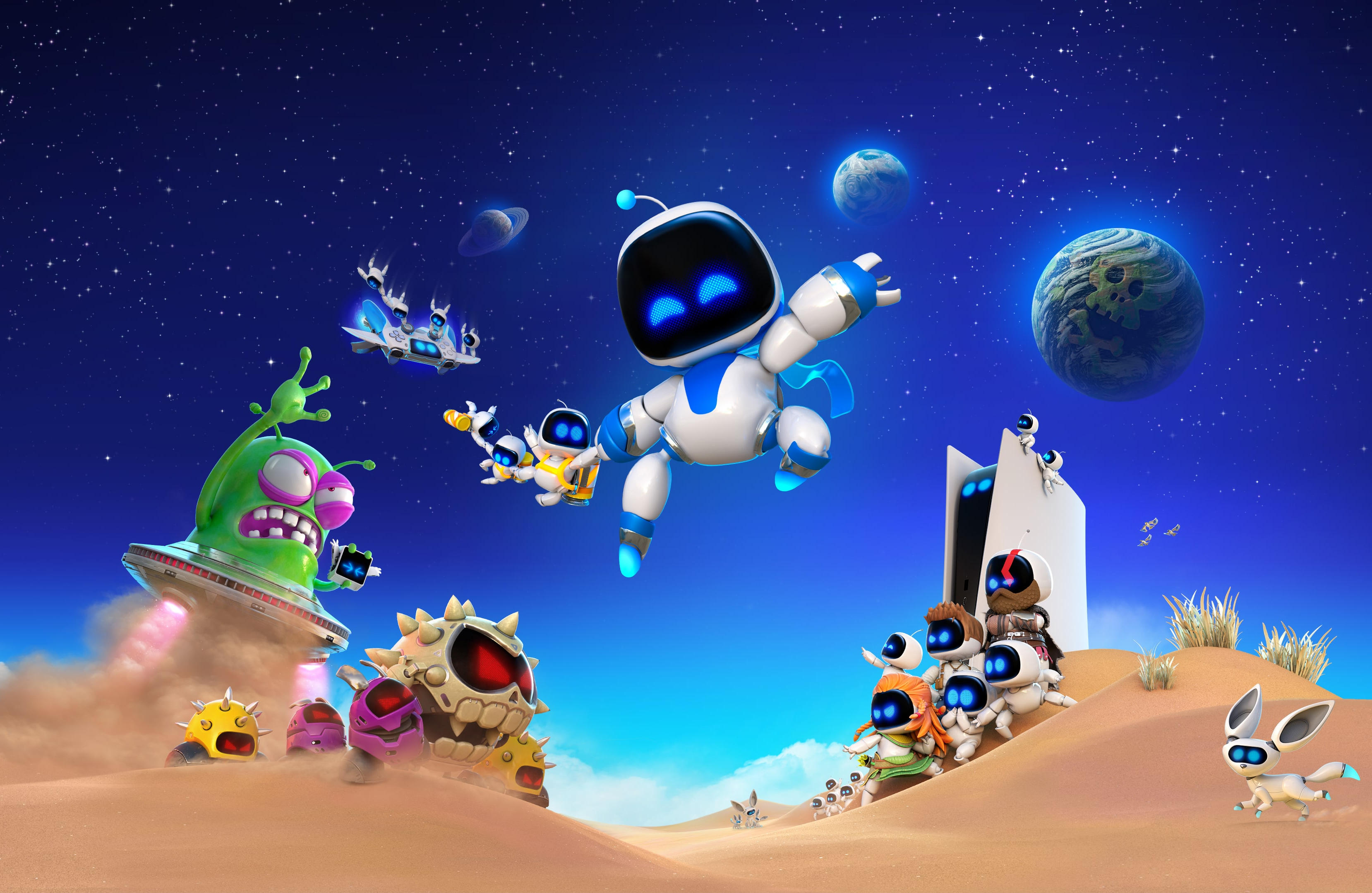

I spent the entirety of my time with Astro Bot giddy and smiling like a schoolkid.
It’s been a long time since I’ve played a game so laser-focused on just being fun. No deeper meaning, no complexities, no pretentiousness – just a whimsical, charming adventure that celebrates the PlayStation legacy.
But Astro Bot isn’t just a nostalgia trip. It’s a brilliant platformer that sits at the pinnacle of the genre, rivaling and perhaps even succeeding the adventures of a certain mustachioed plumber. In fact, if not for the PlayStation cameos and memorabilia, it would be easy to mistake Astro Bot for a top-tier release by Nintendo themselves.
When I first got my PS5, one of the first things I did was play through Astro’s Playroom. If for some reason you own a PS5 and haven’t done that…what’s wrong with you? It’s a fun, short adventure preinstalled on every PS5 console that serves as a tech demo for all the new features of the system and its DualSense controller. More than just being a tech demo, though, it’s a creative and relentlessly charming platformer that laid a foundation for something even greater.
Astro Bot is that greater something. It takes everything Playroom did and dials it up to 11, making great use of every feature of the DualSense without feeling the slightest bit gimmicky. It seamlessly integrates the DualSense’s gyro, speaker, adaptive triggers, and microphone. Most of all, though, it has the best use of haptic feedback I’ve ever experienced in a game.
(A quick note: there was also Astro Bot: Rescue Mission for PlayStation VR, which came out before both games and was almost universally praised…but considering I never owned a PSVR, I’ve never been able to play it.)
If you’re looking for a deep, riveting story, then you might want to look elsewhere. Astro and his crew are attacked by an alien while flying around in their PS5-shaped spaceship. The alien rips out the CPU, the ship crashes, and the ship’s crew, as well as its parts, are thrown across the universe into various galaxies. Astro must round up his crew and collect all the ship parts in order to take the fight to the alien and get the CPU back. It’s serviceable, and there’s certainly a lot of charm and humor during the journey, but deep it is not.
Nor is the core gameplay all that deep. You have a jump button, a punch attack, and a jetpack that allows you to hover for a short time. But simplicity isn’t a bad thing; Astro Bot‘s platforming is really tight and responsive, and Astro’s movement is buttery-smooth and easy to control.
Where the gameplay really gets interesting, though, is in the abilities Astro finds along the way. In many of the game’s levels, Astro will begin the stage by grabbing a certain power up, which he will use to complete that level. Some are fairly basic – like the monkey arms that let him climb up walls, or a bulldog jetpack that shoots him forward and allows him to break through obstacles. One of the more memorable ones is a watch that slows time for a short period and lets Astro traverse or deal with enemies that move or attack too fast to deal with normally. There are a number of these abilities throughout the game, and each one of them adds its own creative twist to the gameplay.
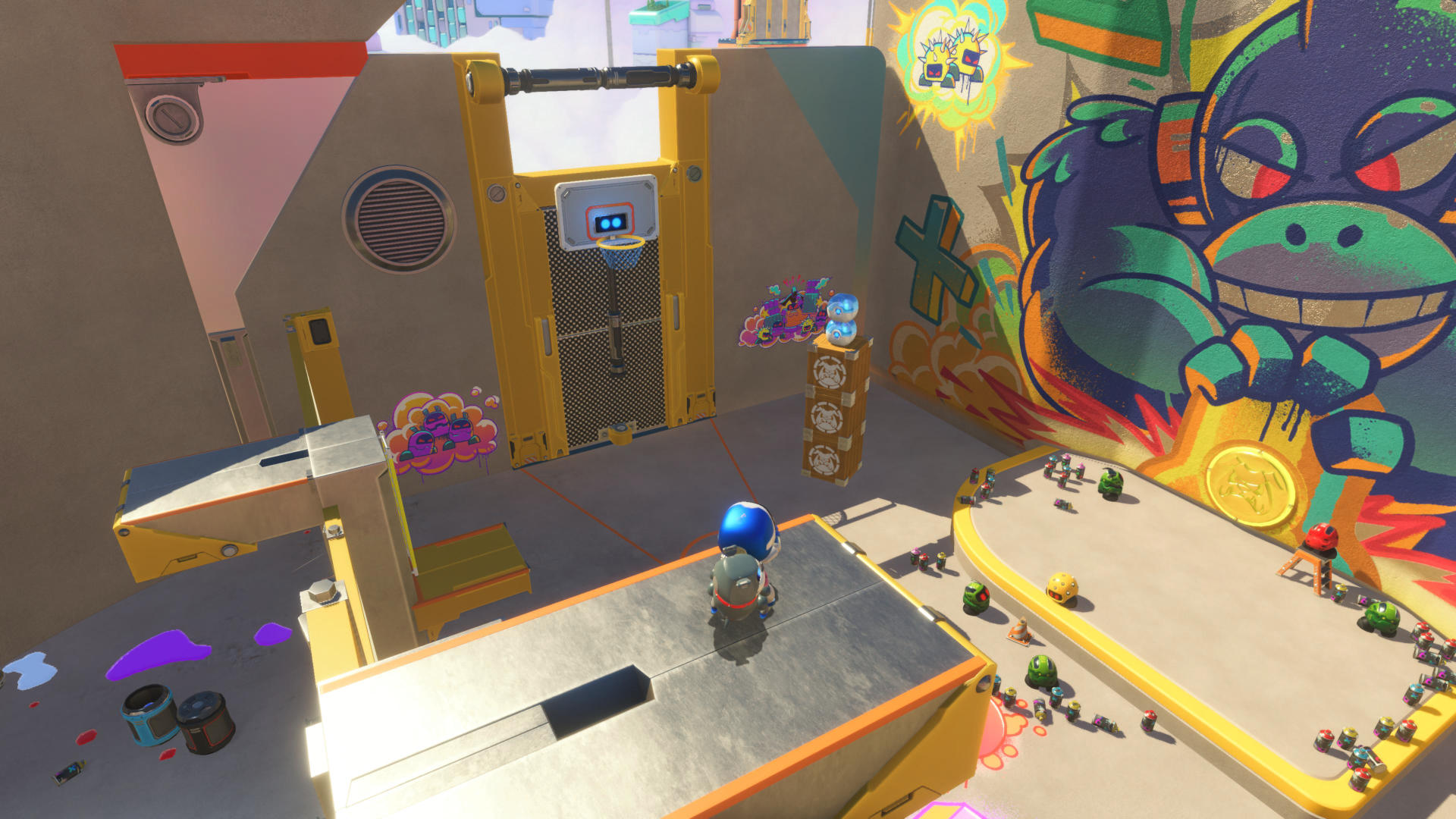
There are over 80 levels scattered throughout Astro Bot‘s galaxies, and more have been added as free updates. The meat of the game lies in the Mario-esque worlds that each utilize one of the game’s power-ups. Some are more linear platforming challenges, while others are more open, encouraging exploration. All are compact and dense, being full of things to discover, and you’ll have no problem completing multiple stages even in a shorter play session.
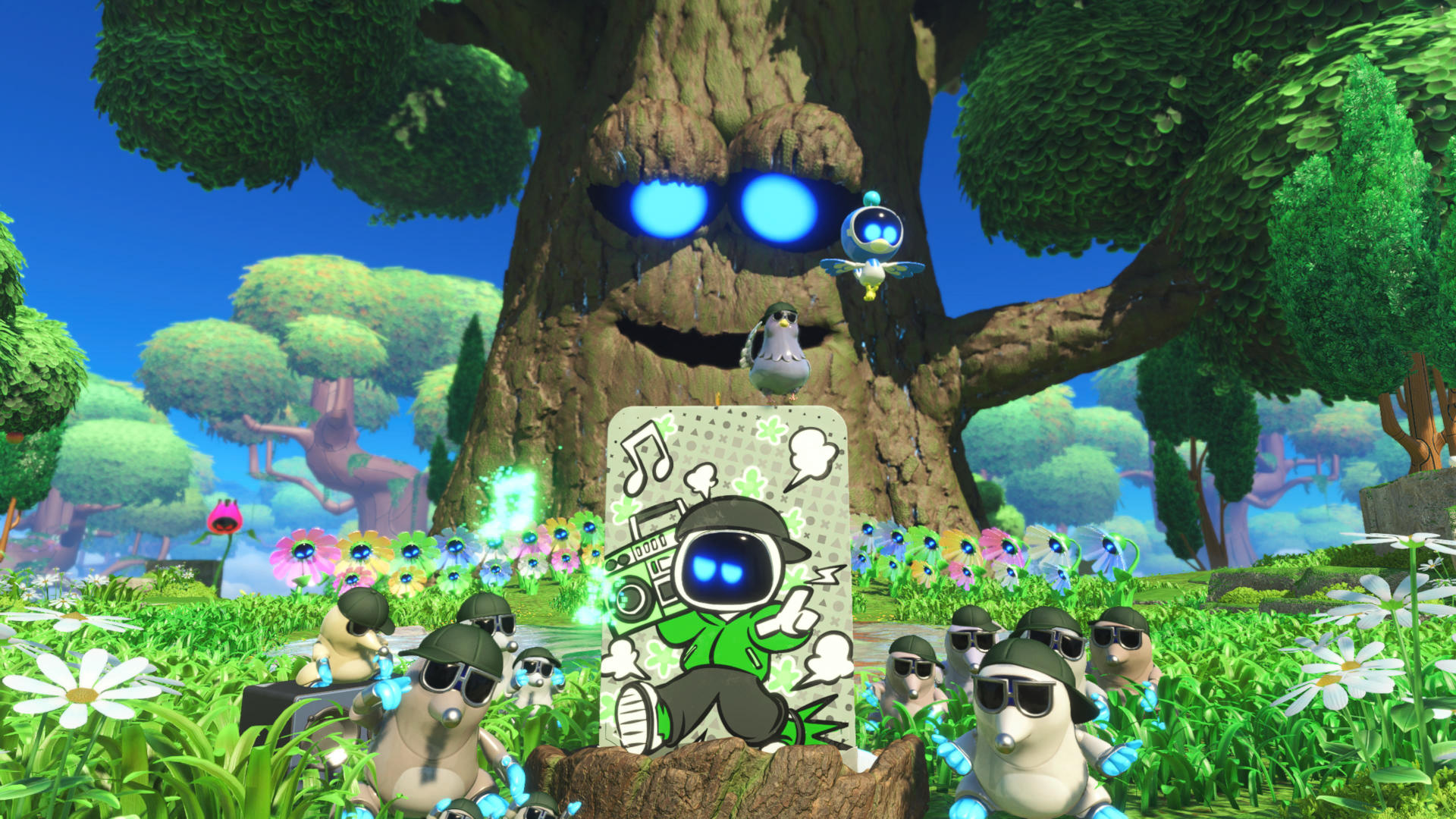
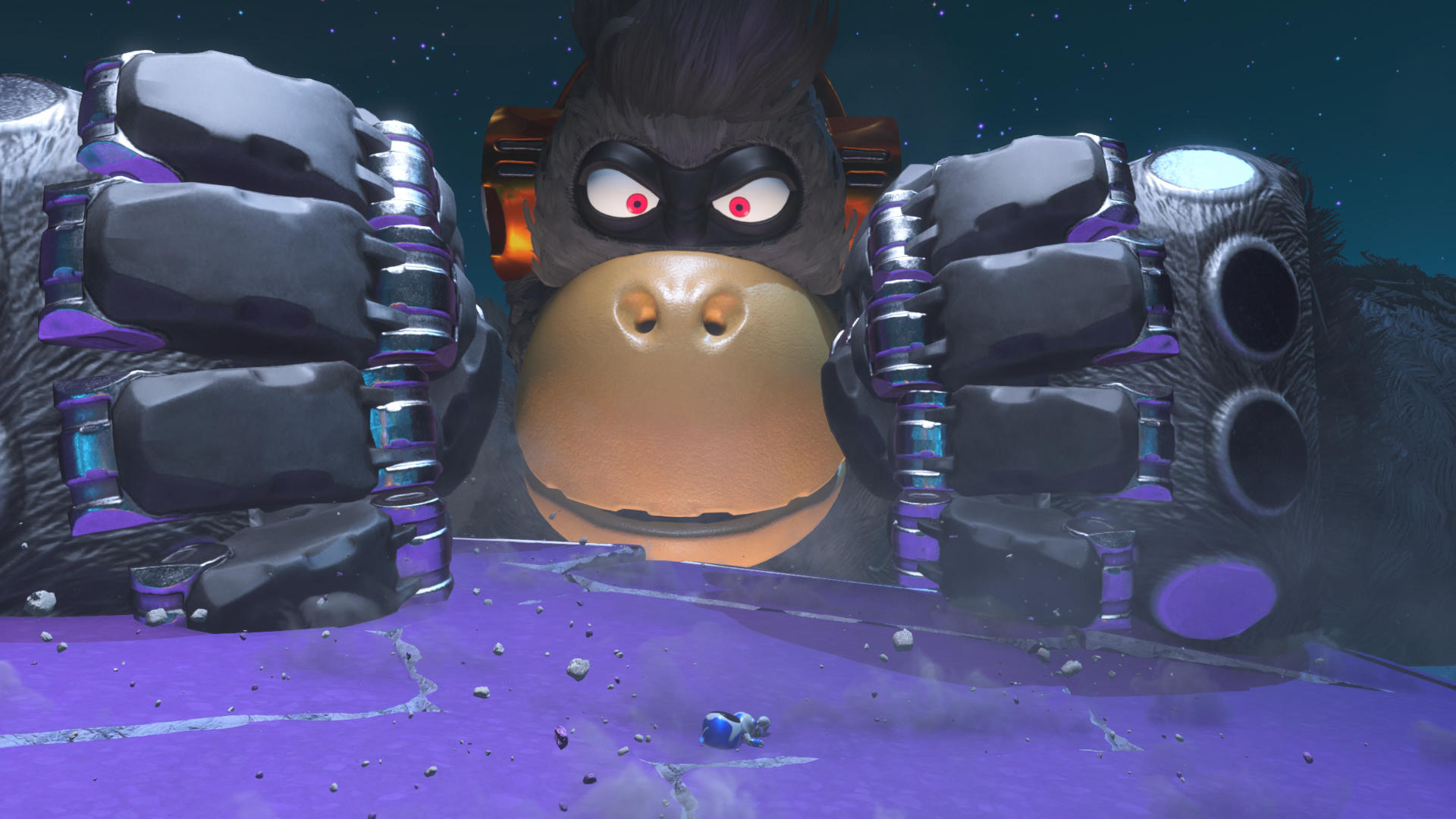
These stages showcase the imagination of Team Asobi’s dev team, and there were multiple times during my playthrough that I found myself surprised and delighted by the creative situations and uses of the game’s abilities. Some of the standouts include climbing a rapping Papa Tree to rid him of the angry little bird chicks that are causing him distress; a spooky level with ghosts machine-gun-throwing knives that you have to slow down time to get past; or an especially memorable stage that sees you go back and forth between full- and mouse-size, with everything scaling up and down with your perspective. Many of these stages also culminate in a boss fight, and those are almost unanimously well-designed, fun, and just the right amount of challenge.
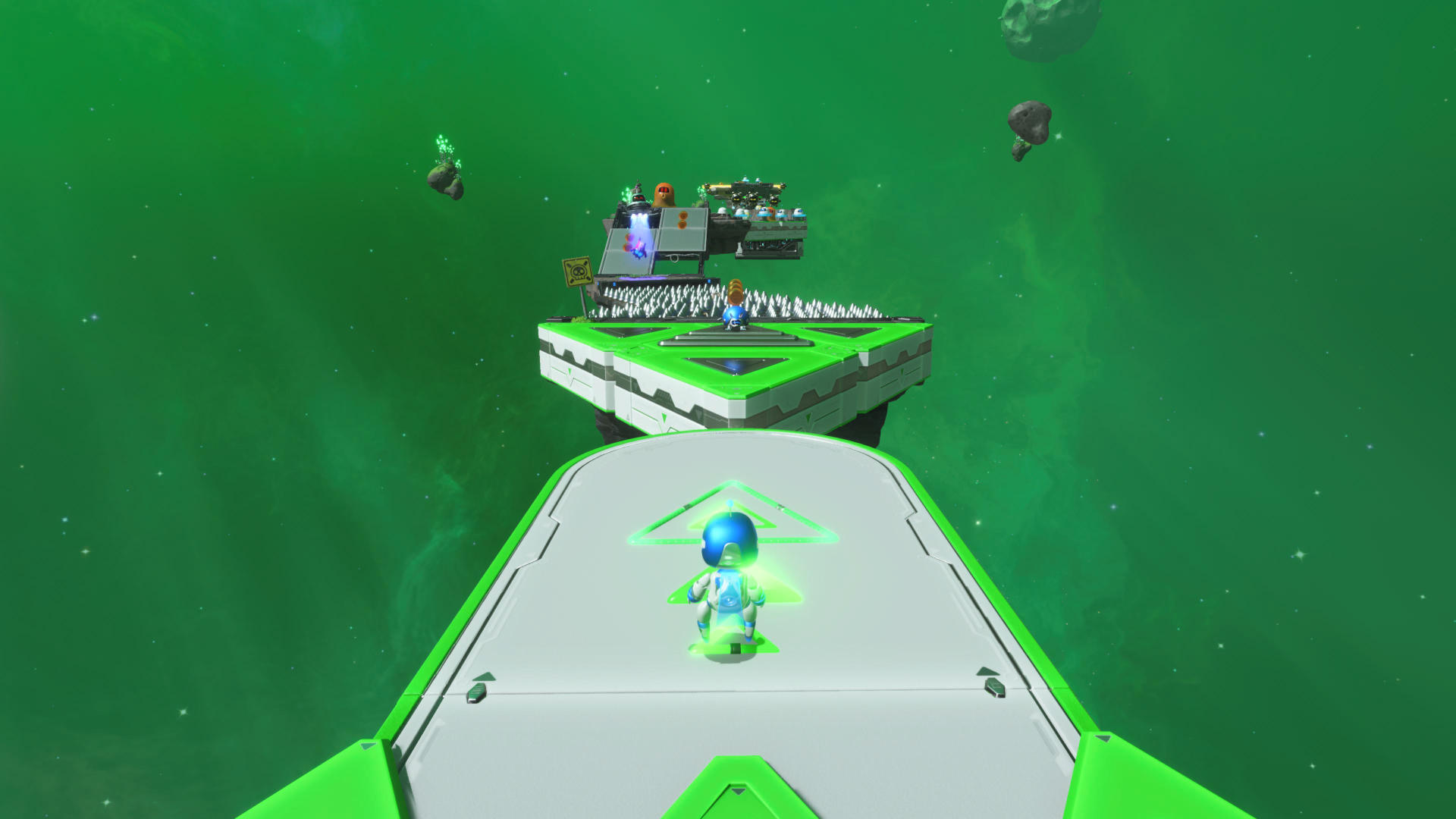
The second type of levels that you’ll run into in Astro Bot are the challenge stages. These present as either platforming challenges or combat scenarios, and they’re a jarring step up in difficulty from the rest of the game. Most of them are one-hit death precision platforming gauntlets without mid-stage checkpoints. While they’re relatively short, they rely almost entirely on trial and error – having to learn them one section at a time, repeating the sections you’ve already mastered when you inevitably die dozens of times. The combat stages aren’t much better, usually requiring you to frantically dodge attacks while trying to, for example, carve out a circle with your jetpack to make a breakable floor drop from under the enemies.
Difficult challenge stages are a mainstay in platformers, of course, and I don’t fault Astro Bot for including them. The problem is that they’re just such a stark contrast to the breezy, laid-back nature of the rest of the game – and that goes for aesthetically too, since they’re pretty spartan in their presentation. But there were so many times that I would spend the first part of a play session reveling in delight and whimsy only to attempt a challenge level and spend the next half hour getting my teeth kicked in over and over again. Granted, they are optional, but if you want to rescue all the Bots you’ll need to beat them.
I realize this criticism probably just sounds like me complaining about parts of the game being too hard and could be reduced to the fact I need to “git gud.” Trial-and-error platformers are a notoriously weak genre for me, after all – you probably won’t see me trying Super Meat Boy anytime soon. And truthfully, I think that if they’d just included some mid-course checkpoints, I wouldn’t have an issue with these stages. But as they are, Astro Bot‘s challenge stages are legitimately punishing, and there’s such a jarring disconnect between them and the rest of the game that I can’t help but point them out as the only thing that I didn’t really care for in my playthrough.
But that’s enough complaining about the challenge stages, because there’s one more type of level in Astro Bot. At the end of each galaxy, Astro will meet up with another Bot based on an iconic PlayStation protagonist. He receives a special weapon or power from that character and goes on to complete a stage emulating that franchise’s gameplay. I won’t spoil any of these (even though you can probably guess at least some of them), but the game does a phenomenal job at translating each franchise’s gameplay loop into its own – and there are some real surprises as well.
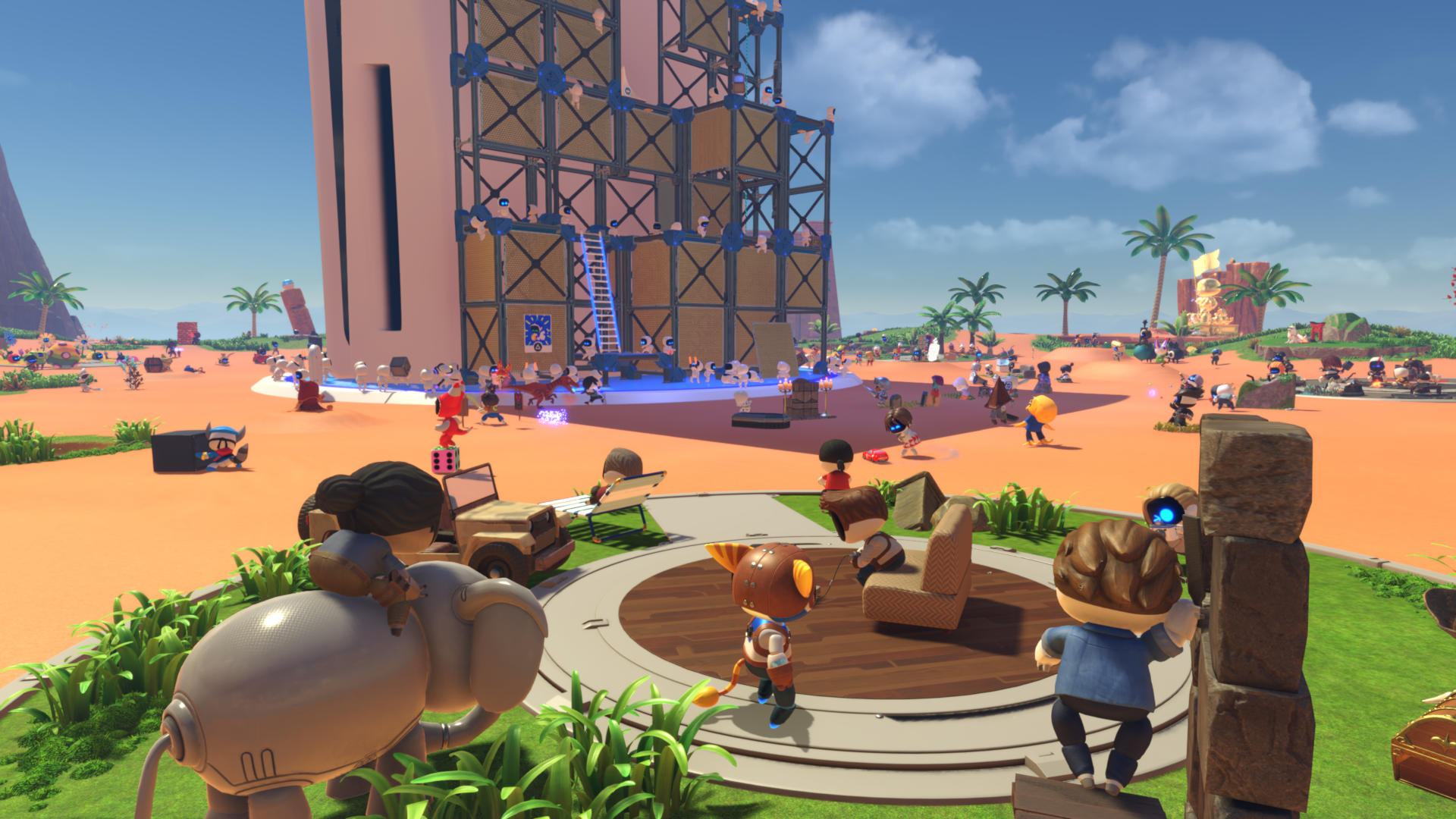
The cameos don’t end there. There are 301 Bots (332, if you count the free updates) to be rescued throughout the game’s stages, and over half of them are based on figures in Sony gaming history. From obvious includes like Crash Bandicoot and Ratchet, to some truly deep cuts, there’s a great variety of fanservice in the Bots alone. After rescuing them, they return to the Crash Site and help you unlock more areas of the hub world to explore. Each cameo Bot has its own unique animations and interactions, and the love and reverence for the source material is on full display – and it makes the Crash Site a bustling, energetic, and outright zany place.
It would be easy for Astro Bot to have been nothing but a PlayStation nostalgia trip. And don’t get me wrong, it absolutely is a nostalgia trip. But the nostalgia is the gravy on top of an incredibly designed game made with the utmost love and passion. It’s charming, whimsical, and unpretentious – and just pure fun. And it’s all backed up by gorgeous, colorful visuals and one of the best soundtracks in recent memory, with so many earworms that you’ll find yourself bopping along with as you play. Just about everything about Astro Bot is designed solely to elicit joy and make you smile.
In the world of modern game design, full bloated open worlds and systems, oppressive atmospheres, and gritty realism, Astro Bot jumps in and reminds us what it’s like to just have fun. We need more games like Astro Bot, and here’s hoping it paves the way for more like it.